Think back a few years, to when you were on holiday and didn’t know which places were ‘must-sees’. Not so long ago, unless you had your trusty Michelin Guide to hand, stepping into a restaurant was a bit of an adventure. Nowadays, we all have a smartphone and internet connectivity (Wi-Fi/4G) is everywhere. So, when we look up a place, an activity, a hotel or even a restaurant, the unknown gives way to experience. Very quickly, thanks to reviews from other visitors, we get a clear idea of what to expect.
3 common misconceptions about social rating
1/ “I’ll have fewer customers if I get negative reviews”
True & False – Negative reviews can be an asset when the issue in question has not had too great an impact. Firstly, it is an opportunity for the service provider to reflect on their practices and, where necessary, improve their services. Secondly, it is a way of restoring their reputation by accepting criticism and responding humbly and publicly to the comments.
2/ “There are a lot of fake comments on the internet”
True – It’s a fact that anyone has the power to post a positive or negative review publicly, even those who have never tried the product or service… It’s not uncommon to come across comments from competitors trying to undermine their rivals. Fortunately, some reputable platforms such as Hotels.com and Booking do their best to filter out fake reviews by only allowing people who have booked a room through their services to post a review. Tripadvisor, for its part, has developed a computerised tool (based on algorithms) designed to detect fake reviews as effectively as possible and remove them quickly!
3/ “A company may request that negative comments be removed”
False – Unless they are dealing with an impostor and have evidence to prove it, service providers cannot ask for reviews they do not like to be removed. Not only because they do not have that power over the various online sites, but also because they risk making the situation worse. With the proliferation of communication platforms (websites, blogs, social media, etc.), dissatisfied customers are quick to voice their discontent on them.
So, what do we think of it in the end?
When we make a choice based on consumer reviews, we refer to this as ‘social proof’. This is a principle of social psychology whereby we tend to mimic the behaviour of others – even strangers – when we are unsure which decision to make.
And, whether the reviews are negative or positive, they will always play a crucial role in our decision-making. Beyond adverts that capitalise on the ‘spontaneous opinion’ of the average person or those featuring an ‘expert’, we will increasingly rely on the opinion of someone who hasn’t been paid to give it.
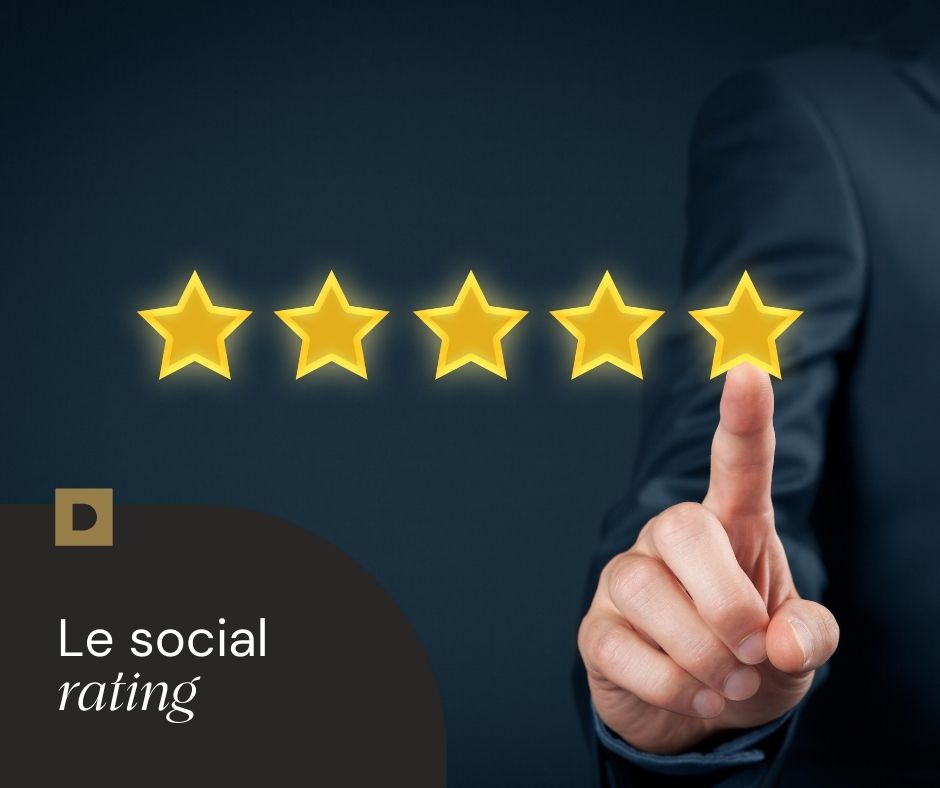
To conclude, you shouldn’t fear negative comments but rather use them as a positive tool to express your understanding and empathy in return. Visitors won’t remember the negative review, but rather your responsiveness and your reply aimed at defusing tensions. So put your fears aside and go for it! Use social ratings strategically to give your business real added value. And, of course, always prioritise the quality of your work. Your customers will reward you with 5-star reviews!

Your digital partner since 1999