As we know, the meteoric rise of mobile technology has made on-the-go internet use accessible to everyone. The smartphone, undoubtedly the star of the screen world, has revolutionised the way we use technology. It is forcing brands to rethink their relationship with consumers.
Mobile phones: our shopping assistant
Now found in the pockets of the vast majority of consumers, the smartphone has established itself as a key tool for harmonising online and in-store experiences. It accompanies us throughout the entire shopping journey. It even plays an indispensable role: that of potentially being the last screen viewed before the final purchase decision.
It is therefore no surprise that mobile is often regarded as the ‘new El Dorado’ for driving in-store traffic. Brands have no choice but to embrace the ‘mobile-first’ trend by placing the smartphone at the heart of their cross-channel marketing strategy.
What is ‘mobile-to-store’?
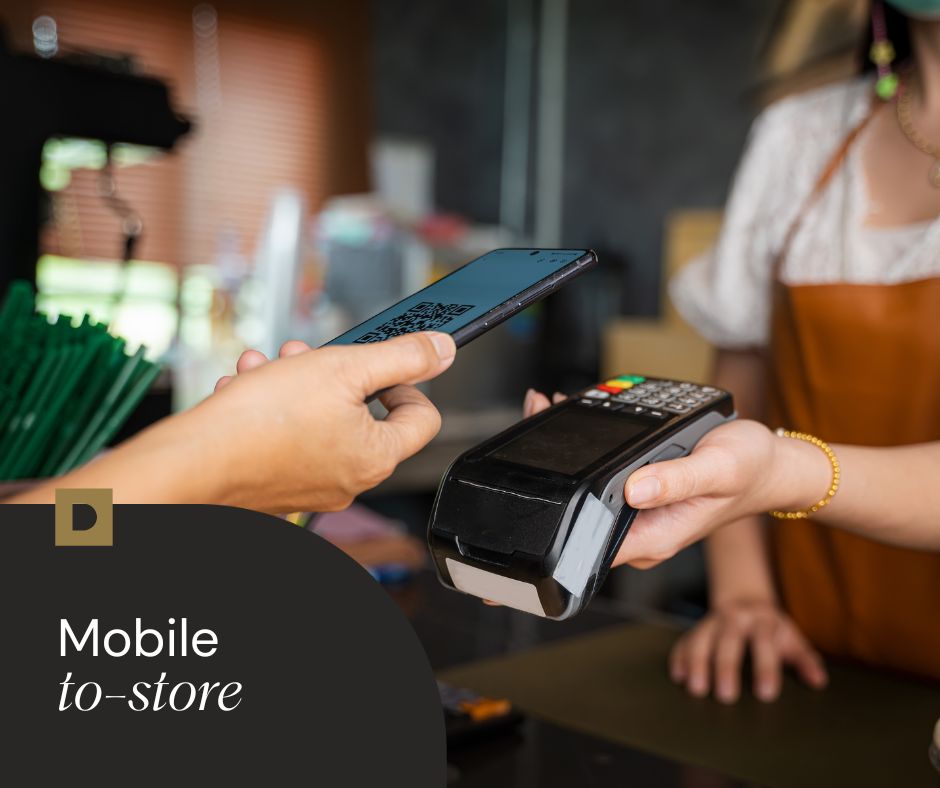
‘Mobile-to-store’ refers to all marketing activities aimed at attracting mobile users to a physical retail outlet. It involves striking a delicate balance between anticipation, geolocation data and predicting purchase intentions – all whilst ensuring you never become too intrusive.
Think about it: how many times have you checked the availability of a product on your smartphone before heading out? How many times have you decided to pop into a shop after receiving a notification about a current promotion? How many times have you looked up a shop near you before heading there?
On all these occasions, you were the target of mobile-to-store marketing campaigns. Gone are the days of the linear shopping journey! Nowadays, the decision-making process involves many more steps, with the smartphone playing a key role in the vast majority of purchasing decisions. Engaging mobile users through their favourite device has therefore naturally become a central part of the most effective marketing strategies.
Geolocation: the compass for your mobile marketing
There are numerous techniques designed to engage consumers and drive footfall into shops. However, the current trend points very clearly towards geolocation marketing. How does it work? It combines mobile push notifications with the power of geolocation to send notifications at the right time, in the right place and to the right person. It’s simple: you enter a defined geographical area and… surprise! You receive a personalised notification. A ‘beacon’, for example, is a small device capable of sending notifications to smartphones and tablets within a certain radius of your retail outlet.
We should also mention the concept of the store locator, a service that helps customers find a physical shop. Despite the steady rise of e-commerce and m-commerce, the ROPO (Research Online/Purchase Offline) phenomenon constantly reminds us that online sales have not yet managed to supplant physical shops. Many consumers still prefer to visit a shop in person. The store locator therefore plays a key role in the purchasing process: it is the shop’s gateway to the web, the bridge between online and offline.
And now… get on your screens! Make the most of mobile-to-store and attract your customers into your shop!

Your digital partner since 1999